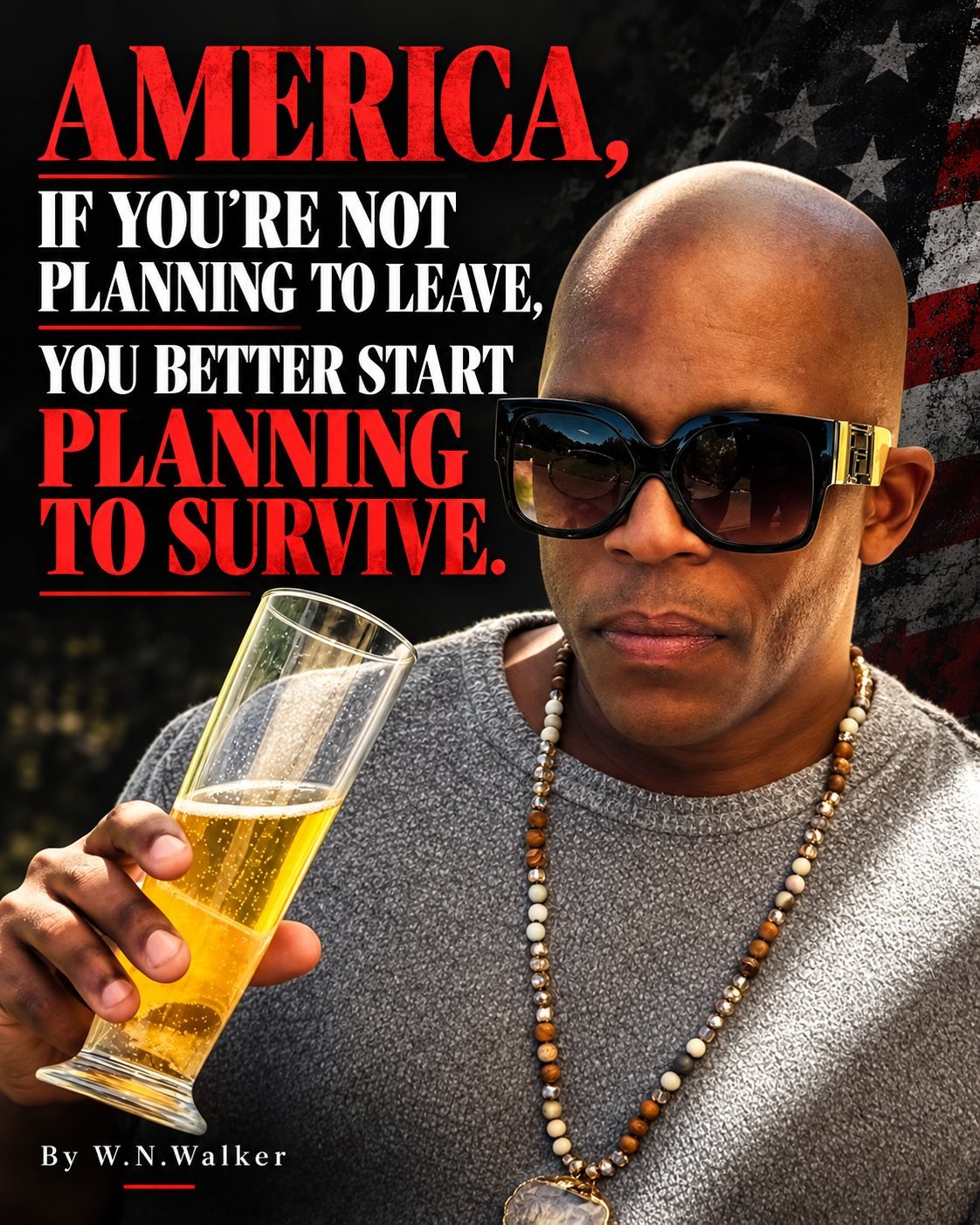
AMERICA, IF YOU'RE NOT PLANNING TO LEAVE, YOU BETTER START PLANNING TO SURVIVE.
The rest of the world is preparing for emergencies. My American friends, what exactly are YOU waiting for?
By W.N.Walker | Media King | Editor-in-Chief, I Am Puerto Vallarta Magazine
October 14, 2026
Let me say something to my friends and family back in the United States, and I'm going to say it with love, a little attitude, and absolutely no sugarcoating.
IF YOU ARE NOT PLANNING TO LEAVE THE UNITED STATES, YOU NEED TO BE PREPARING YOUR HOUSEHOLD FOR WHAT COULD COME NEXT. PERIOD.
Now, before somebody starts screaming that I'm being dramatic, let me give you some facts.
In March 2025, the European Union introduced an emergency preparedness strategy encouraging households across its 27 member countries to maintain enough essential supplies for at least 72 hours.
Sweden distributed millions of updated civil-defense brochures explaining what citizens should do in the event of a crisis or war.
Canada recommends that households maintain emergency supplies for at least 72 hours.
And right here in the United States, FEMA has long recommended keeping emergency food, drinking water, medications, and other survival supplies.
So let me ask you something.
If governments around the world are telling their citizens to prepare, why are so many Americans acting like preparation is something only crazy people do?
I'm not telling you World War III starts tomorrow. I'm not claiming that the grocery stores are about to close next Tuesday.
I'm telling you that the world is unstable enough that depending entirely on everything working perfectly every single day is no longer a reasonable personal emergency plan.
THE WORLD DOESN'T HAVE TO END FOR YOUR LIFE TO BE TURNED UPSIDE DOWN.
Think about it.
One major hurricane can leave entire communities without electricity, clean water, gasoline, or functioning grocery stores.
A cyberattack can disrupt payment systems, hospitals, or communications.
A prolonged infrastructure failure can interrupt food deliveries and access to medications.
International conflicts can create economic disruptions and supply-chain problems thousands of miles away.
And financial instability can make already expensive necessities even harder for struggling households to afford.
These are risks, not predictions. But every single one deserves serious consideration.
Baby, you don't have to believe in conspiracy theories to understand that a grocery store with empty shelves doesn't care about your political affiliation.
Neither does a power outage.
Neither does a flooded highway.
And your debit card is absolutely useless when the payment network isn't working.
IF YOU'RE STAYING, HERE'S WHAT I WANT YOU TO DO.
I'm not suggesting that everyone needs to run out and build an underground bunker with a year's supply of canned beans.
But I am suggesting that every American household should have an emergency survival plan.
1. BUILD AN EMERGENCY FOOD SUPPLY.
Start with enough shelf-stable food for seven days if possible. Build toward two weeks as your budget allows.
Rice, beans, canned vegetables, canned proteins, oatmeal, peanut butter, dried foods, and whatever your family actually eats.
Buy a little extra each grocery trip. Rotate supplies before they expire.
2. STORE DRINKING WATER.
FEMA recommends at least one gallon of water per person per day for several days.
That's drinking water AND basic sanitation.
Don't assume your kitchen faucet will always work.
3. KEEP SOME EMERGENCY CASH.
Not your entire savings under a mattress. Let's not get ridiculous.
But enough small bills to purchase essential supplies if electronic payments temporarily stop working.
4. PROTECT YOUR MEDICATIONS AND HEALTH.
Maintain an emergency supply of necessary medications when medically and legally possible.
Have a first-aid kit, personal hygiene products, important medical information, and supplies for anyone with special needs.
5. PREPARE FOR LIFE WITHOUT ELECTRICITY.
You need flashlights, batteries, charged power banks, a battery-powered or hand-crank radio, and a safe way to communicate.
If you rely on electrically powered medical equipment, you need a specific backup plan.
And please don't operate generators or charcoal grills indoors. Carbon monoxide poisoning is not the kind of emergency we're trying to add to the situation.
6. GET YOUR DOCUMENTS TOGETHER.
Passports. Birth certificates. Identification. Insurance. Property documents. Emergency contacts.
Make secure digital copies and protect physical copies in a waterproof container.
And if your passport is expired, handle that now.
Not because you necessarily need to leave the country, but because having options is always better than having none.
7. CREATE A FAMILY COMMUNICATION AND EVACUATION PLAN.
Where will everyone meet if phones stop working?
Who will check on your elderly relatives?
What happens to the pets?
Where will you go if authorities order an evacuation?
Figure that out while everyone is calm, not while you're standing in the dark looking for your car keys.
AND PLEASE, STOP MAKING PREPAREDNESS A POLITICAL ARGUMENT.
This is where some of y'all completely lose me.
You can support the president, oppose the president, love your governor, hate Congress, vote Republican, vote Democrat, or decide you're sick of everybody.
A disaster does not check your voter registration card before knocking out your electricity.
Being prepared isn't an endorsement of anybody's political position.
It's personal responsibility.
And if you have children, aging parents, people with disabilities, or family members who depend on you, preparedness becomes even more important.
FROM HERE IN MEXICO, LET ME SAY THIS.
I have friends and family throughout the United States whom I care about deeply.
Atlanta. Alabama. Georgia. New York. All over the country.
And I don't want a single one of you caught completely unprepared because you assumed somebody would always be coming to rescue you immediately.
Emergency responders do extraordinary work, but widespread disasters can delay help.
If you're considering relocating, make a realistic, legal, financially responsible plan.
If you're staying in America, that's your decision, and I respect it.
But staying should not mean sitting around doing absolutely nothing.
Know your neighbors. Check on the elderly. Talk to your family. Get your finances organized. Prepare your household.
Because the goal isn't just surviving an emergency yourself.
The goal is being in a position to help somebody else.
MY FINAL WORD.
I'm not predicting the collapse of America.
I'm not telling you war is inevitable.
I'm not selling fear, survival buckets, or a secret bunker in somebody's backyard.
I'm telling you something very simple:
You do not need to know exactly what is coming to prepare for something going wrong.
Start with three days of supplies. Build toward seven. Aim for two weeks if your circumstances allow.
Make a plan. Have an emergency bag. Know where your documents are. Keep some cash. Know how to reach your family.
And don't put yourself into debt trying to prepare. Start with what you can afford.
Because if nothing happens, wonderful. You have extra groceries, emergency supplies, and peace of mind.
But if something does happen?
You'll be grateful you took this seriously.
MY AMERICAN FRIENDS, I LOVE YOU. BUT PLEASE, GET YOUR HOUSEHOLDS IN ORDER.
PREPAREDNESS IS NOT PARANOIA. IT'S RESPONSIBILITY.
And I'd much rather have my friends laughing at me for being prepared than calling me because they have absolutely no idea what to do when an emergency arrives.
With love, facts, and just enough attitude to make you pay attention.
W.N.Walker
Media King | Editor-in-Chief
I Am Puerto Vallarta Magazine
www.IAmPuertoVallarta.com
SHARE THIS WITH FIVE PEOPLE YOU CARE ABOUT. Not to scare them. To make sure they have a plan.
Sources and further reading
European Commission — EU Preparedness Union Strategy, March 26, 2025.
Government of Sweden — Civil Defence and Crisis or War Preparedness.
U.S. Department of Homeland Security / FEMA — Emergency Supply Kit Checklist.
Government of Canada — Emergency Preparedness and Emergency Kits.
Last updated October 14, 2026